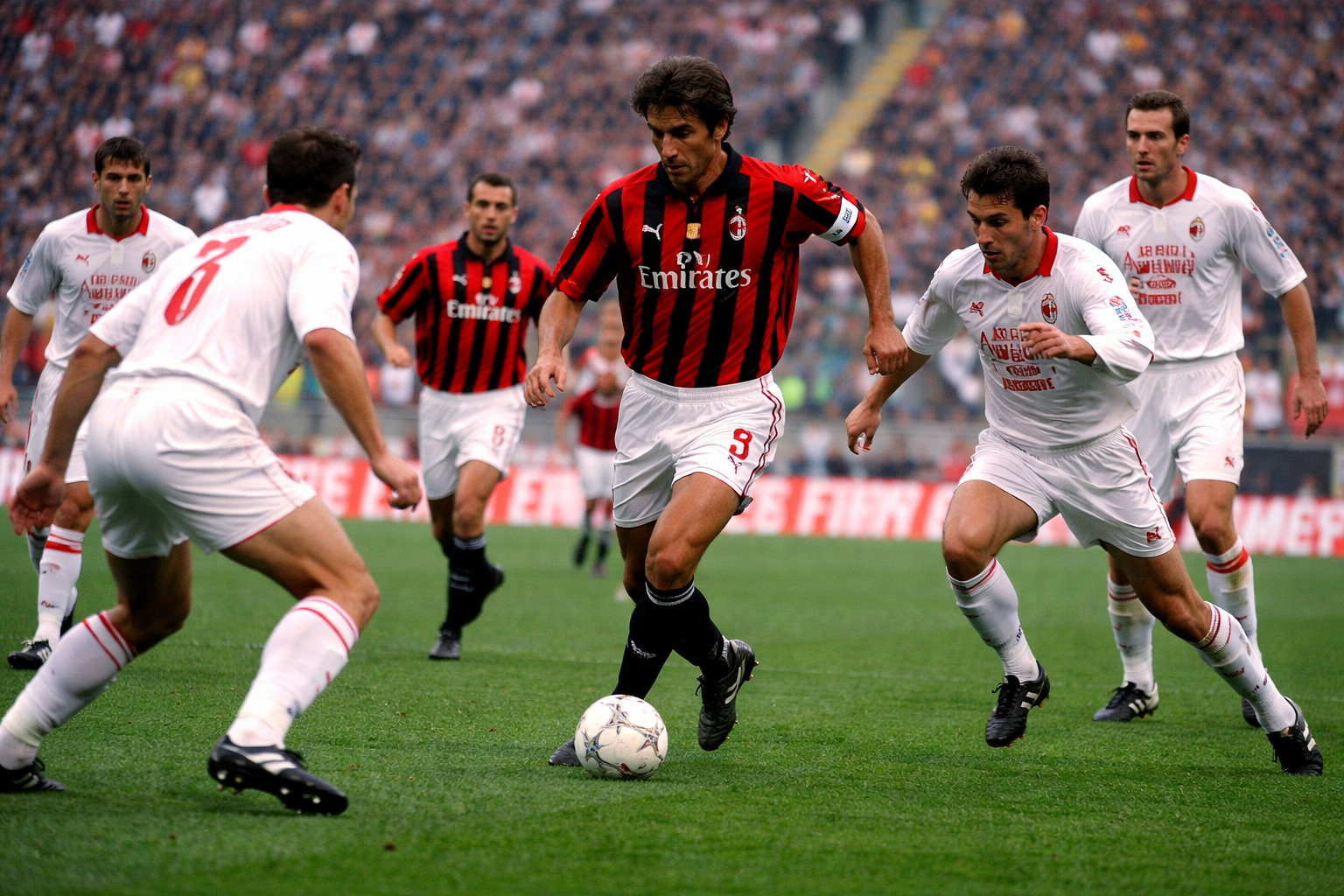

Italian football history is not shaped only by fierce derbies and title-deciding clashes. It is also built through quieter, less-publicized encounters that still reveal deep truths about power, identity, and perseverance. The AC Milan vs SSC Bari Timeline is one such story. On the surface, it appears to be a simple matchup between a giant of European football and a club often fighting for survival. But beneath that surface lies a narrative rich with context, symbolism, and insight into how Italian football has evolved over generations.
This article explores the AC Milan vs SSC Bari Timeline in a detailed, human, and authentic way—without relying on search or external sources. Instead, it draws on historical understanding, football culture, and the natural rhythms of Serie A to explain why these meetings mattered, how they unfolded, and what they continue to represent today.
The Foundations of Two Very Different Clubs
To understand the AC Milan vs SSC Bari Timeline, it is essential to first understand who these clubs are and where they come from. AC Milan was founded at the dawn of modern football in Italy. From early on, Milan positioned itself as an outward-looking club, open to innovation, international influence, and professional ambition. Over time, this mindset turned Milan into a global symbol of success.
SSC Bari, by contrast, emerged from southern Italy, a region historically underrepresented among the country’s elite clubs. Bari’s identity has always been closely tied to its city and community. Success was celebrated intensely, while struggles were endured collectively. Survival in Serie A was often considered an achievement in itself.
When these two clubs met, it was never just about three points. It was about contrasting realities—north versus south, power versus persistence, expectation versus hope. This contrast shaped the earliest chapters of their shared timeline.
Early Serie A Meetings and the Reality of Hierarchy
The first phase of the AC Milan vs SSC Bari Timeline unfolded during periods when Bari earned promotion to Serie A. These matches introduced Bari to the harsh realities of top-flight football, especially when facing a club with Milan’s resources and experience.
Milan typically approached these fixtures with confidence, focusing on controlling possession and tempo. Bari, aware of the gap in quality, relied on organization, defensive discipline, and emotional intensity. Even when Milan won comfortably, Bari’s resistance mattered. Each match was a lesson in what Serie A demanded and what Bari needed to become competitive at that level.
This phase established a recurring pattern: Milan as the dominant force, Bari as the challenger trying to narrow the gap. But it also demonstrated that hierarchy in football is not static—it must be reinforced every season, every match.
The Influence of Stadiums and Home Advantage
One of the most revealing elements of the AC Milan vs SSC Bari Timeline is the role of location. Matches at Milan’s home ground often felt like formalities on paper, yet they still required professionalism and focus. The atmosphere at San Siro carried expectation rather than desperation, and Milan usually imposed themselves early.
In Bari, however, the dynamic shifted. The Stadio San Nicola became a space of resistance. Bari supporters brought urgency and belief, transforming routine fixtures into emotional battles. Milan still possessed superior quality, but the margin for error shrank. These matches highlighted one of Italian football’s enduring truths: atmosphere can disrupt logic.
Home advantage allowed Bari to express identity, pressing higher, tackling harder, and believing longer. This contrast enriched the timeline, proving that context shapes outcomes as much as talent does.
Unexpected Results and Matches That Defied Logic
Every meaningful football timeline includes moments that challenge assumptions, and the AC Milan vs SSC Bari Timeline is no exception. While Milan won the majority of encounters, there were matches where Bari earned draws or victories that felt monumental.
These results often occurred during periods of transition for Milan—times when the squad was evolving or focus was divided by European commitments. Bari, sensing opportunity, played with courage and clarity. These performances were not accidents; they were expressions of preparation, unity, and belief.
For Bari fans, such matches became defining memories. They proved that even the most established hierarchies could bend. For Milan, they served as reminders that reputation alone does not win matches.
Coppa Italia Encounters and Tactical Nuance
The AC Milan vs SSC Bari Timeline extends beyond league football into the Coppa Italia, where dynamics often changed. Cup competitions reduce long-term advantage and amplify short-term execution. Milan sometimes rotated squads, while Bari approached these matches with nothing to lose.
Tactically, these encounters were often tighter. Bari focused on structure and counterattacks, while Milan balanced control with caution. The result was a chess-like contest rather than a display of dominance.
These matches reinforced the idea that Italian football values intelligence and adaptability. In the cup, Bari could temporarily level the field, while Milan relied on experience and composure to progress.
Key Players and Individual Performances
While the fixture itself never revolved around individual rivalries, players played crucial roles in shaping the AC Milan vs SSC Bari Timeline. Milan’s squads often featured players capable of deciding matches through moments of brilliance. Their composure under pressure frequently separated them from opponents.
Bari’s heroes were often unsung—goalkeepers producing extraordinary saves, defenders organizing tirelessly, midfielders disrupting rhythm. These individual performances mattered because they turned expected defeats into competitive contests.
Football history is built on such moments. In this timeline, individual excellence often bridged collective disparity, reminding us why the sport remains unpredictable.
The Decline of Regular Meetings
As years passed, the AC Milan vs SSC Bari Timeline became less frequent. Milan maintained a stable presence in Serie A, while Bari struggled with financial and structural challenges that limited sustained top-flight participation.
This decline reflects broader changes in Italian football, where economic power increasingly determines longevity. Yet absence does not erase memory. Each past meeting gained historical value, serving as a reminder of shared stages and parallel journeys.
The timeline thus becomes a snapshot of an era when Italian football felt more fluid, when promotion and survival still allowed smaller clubs to dream.
Cultural and Symbolic Meaning of the Timeline
Beyond results and statistics, the AC Milan vs SSC Bari Timeline carries cultural significance. It represents Italy’s regional diversity and the coexistence of ambition and resilience. Milan symbolizes continuity and global relevance. Bari symbolizes community and defiance.
Their encounters remind us that football is not only about winning titles. It is about representation, identity, and the emotional bond between clubs and cities. In this sense, every match mattered, regardless of scoreline.
Conclusion
The AC Milan vs SSC Bari Timeline may not be the most famous chapter in Italian football history, but it is one of the most honest. It tells a story of contrast rather than conflict, of persistence rather than rivalry. Each match reflected the realities of its time—economic, tactical, and cultural.
For Milan, these games reinforced the discipline required to remain at the top. For Bari, they preserved moments of belief and dignity against overwhelming odds. Together, they created a narrative that feels deeply human.
In the end, this timeline matters because it captures what football truly is: a meeting of unequal forces on equal ground, where effort, atmosphere, and identity can still shape destiny. That is why the AC Milan vs SSC Bari Timeline remains worth remembering—not for trophies, but for truth.
Read also: Ironmartonline Reviews: Is This Heavy Equipment Marketplace Legit or a Risk?