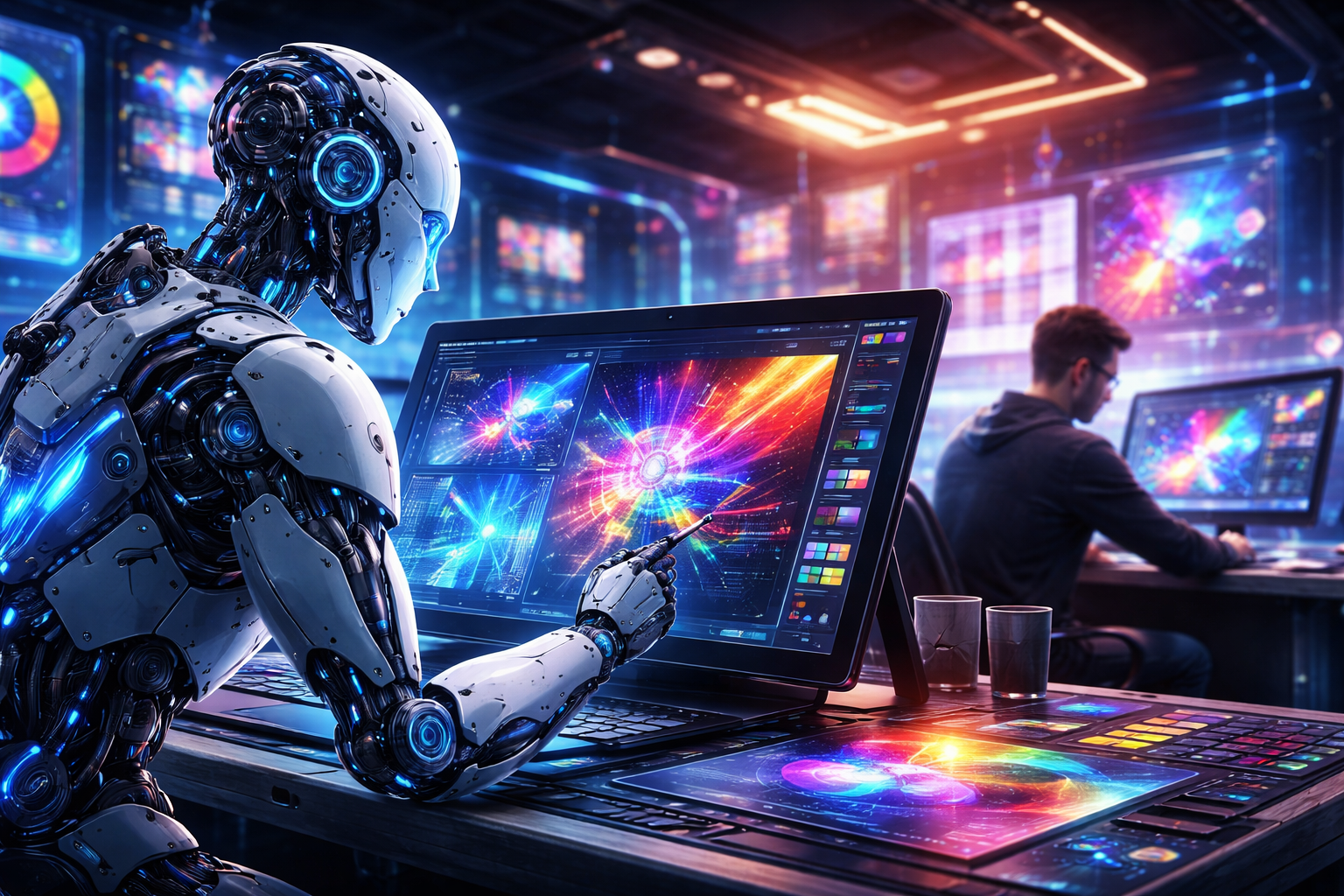

Creativity has always evolved alongside technology. From cave paintings to printing presses, from digital tablets to cloud-based design tools, every leap has reshaped how humans express ideas visually. Today, we are living through one of the most profound shifts yet. Artificial intelligence is no longer an assistant quietly working in the background—it is becoming an active participant in the creative process.
Within this transformation, AI Graphic Design GFXRobotection emerges as a concept that goes far beyond automation. It represents a new philosophy of creative production—one that blends speed, intelligence, and protection into a single ecosystem. As AI generates visuals at unprecedented scale, GFXRobotection ensures that creativity remains original, secure, and aligned with human values.
This article takes a deep, human-centered look at AI Graphic Design GFXRobotection: how it works, why it matters, and what it means for designers, businesses, and the future of creativity itself.
What AI Graphic Design GFXRobotection Really Means
At a surface level, AI graphic design refers to the use of machine learning models to generate visual content—logos, layouts, illustrations, typography, and more. But GFXRobotection adds a critical dimension that traditional AI design tools often overlook: protection.
AI Graphic Design GFXRobotection is the integration of intelligent creative generation with systems designed to preserve originality, enforce design rules, and safeguard intellectual property. It is not just about making design faster; it is about making automated creativity responsible and sustainable.
In practical terms, this means AI tools that understand brand identity, recognize visual similarities, avoid copyrighted patterns, and maintain creative boundaries. Instead of producing endless generic visuals, GFXRobotection-focused systems prioritize quality, consistency, and trust.
The Evolution from Manual Design to Intelligent Systems
For decades, graphic design was a deeply manual craft. Designers relied on intuition, experience, and repetition to refine their work. Digital tools accelerated production, but the core process remained human-driven. AI changes that dynamic.
With AI Graphic Design GFXRobotection, the creative workflow becomes collaborative rather than sequential. AI can generate multiple design options simultaneously, analyze audience preferences, and adapt layouts in real time. Designers no longer start from a blank canvas—they start from intelligent suggestions.
This evolution does not erase craftsmanship. Instead, it shifts where craftsmanship lives. The designer’s value moves upstream, into concept development, creative direction, and storytelling, while AI handles execution at scale.
Why Protection Matters in Automated Creativity
One of the biggest misconceptions about AI-generated design is that speed alone equals progress. In reality, unprotected automation can create serious problems. Designs may unintentionally resemble copyrighted work, misuse brand assets, or dilute visual identity through inconsistency.
GFXRobotection exists to prevent these outcomes. It introduces safeguards that monitor originality, detect duplication, and ensure compliance with creative standards. These protections are especially vital in environments where hundreds or thousands of visuals are produced daily.
In a world where content spreads instantly, a single design mistake can damage brand reputation or trigger legal challenges. GFXRobotection transforms AI from a risky shortcut into a reliable creative partner.
AI Graphic Design GFXRobotection and Brand Integrity
Brand integrity is built on repetition and recognition. Colors, typography, layout styles, and imagery all work together to create trust. When AI enters the design process, maintaining this integrity becomes both more challenging and more important.
AI Graphic Design GFXRobotection addresses this by embedding brand guidelines directly into the creative engine. AI systems can be trained to follow exact rules regarding spacing, color usage, tone, and visual hierarchy. Any output that deviates from these standards can be automatically corrected or rejected.
This allows brands to scale their creative output without sacrificing identity. Whether producing social media graphics, advertisements, or internal materials, every design remains unmistakably on-brand.
The Human Role in an AI-Driven Design Ecosystem
Despite fears to the contrary, AI Graphic Design GFXRobotection does not eliminate the need for human designers. Instead, it elevates their role.
Humans bring context, empathy, and cultural understanding—qualities that machines cannot replicate. AI excels at pattern recognition and repetition, but it lacks lived experience. The most effective creative ecosystems use AI to handle volume and consistency while humans guide vision and meaning.
Designers become curators and strategists rather than production machines. They review AI-generated options, refine concepts, and inject emotion into visuals. GFXRobotection ensures that this collaboration remains balanced and ethical.
Ethical Creativity and Responsible AI Design
As AI becomes more capable, ethical responsibility grows alongside it. Visual content influences perception, behavior, and culture. Without safeguards, automated design systems can unintentionally reinforce stereotypes, misrepresent communities, or spread misleading imagery.
AI Graphic Design GFXRobotection can incorporate ethical constraints into creative systems. AI models can be trained to avoid biased representations, respect cultural sensitivities, and adhere to ethical branding principles. This transforms AI from a neutral tool into a values-aware creative assistant.
Responsible automation is not about limiting creativity—it is about ensuring that creativity contributes positively to society.
Real-World Applications Across Industries
The impact of AI Graphic Design GFXRobotection extends far beyond design studios. Its applications span industries where visual communication is essential.
In marketing, AI can generate personalized visuals for different audiences while maintaining brand consistency. In e-commerce, product imagery can adapt dynamically to user preferences without violating intellectual property. In media, layouts and graphics can be produced at scale while preserving editorial identity.
Education, healthcare, and nonprofit organizations also benefit. With limited resources, these sectors can leverage AI design tools confidently, knowing that GFXRobotection prevents misuse or inconsistency.
The Technology Powering GFXRobotection
Behind AI Graphic Design GFXRobotection lies a sophisticated blend of technologies. Machine learning models analyze visual patterns, typography, and composition. Computer vision systems detect similarities between designs to prevent duplication or infringement.
Rule-based engines enforce brand guidelines and creative constraints. Feedback loops allow human designers to correct AI outputs, helping the system learn and improve over time.
This layered architecture ensures that creativity remains flexible while protection remains firm. It is not a single algorithm, but a coordinated system designed for long-term creative sustainability.
Challenges, Misconceptions, and Growing Pains
No transformative technology arrives without challenges. AI Graphic Design GFXRobotection requires high-quality training data and thoughtful implementation. Poorly configured systems can produce bland or overly rigid designs.
There is also a learning curve. Designers must adapt to new workflows and redefine their roles. Resistance often comes not from technology itself, but from fear of losing creative control.
The reality is that AI does not remove control—it redistributes it. GFXRobotection ensures that automation serves creativity rather than dominating it.
The Future of AI Graphic Design GFXRobotection
Looking ahead, AI Graphic Design GFXRobotection will become more intuitive and adaptive. Future systems may understand emotional context, narrative intent, and cultural nuance with greater accuracy. Designs could evolve in real time based on audience response while remaining protected and compliant.
As AI continues to mature, the line between human and machine creativity will blur—not in competition, but in collaboration. The most successful creators will be those who embrace AI as a partner, guided by principles of protection and responsibility.
Conclusion
AI Graphic Design GFXRobotection is not just a technological advancement—it is a mindset shift. It recognizes that creativity deserves both freedom and protection, speed and structure, innovation and responsibility.
By combining intelligent automation with robust safeguards, GFXRobotection empowers designers and organizations to create boldly without fear. It preserves originality in an age of infinite content and ensures that creativity remains human at its core.
The future of design is not about choosing between art and algorithms. It is about building systems where creativity flourishes—protected, amplified, and guided by human vision.
Read also: Noelle Watters Biography: Early Life, Career Achievements, and Personal Insights