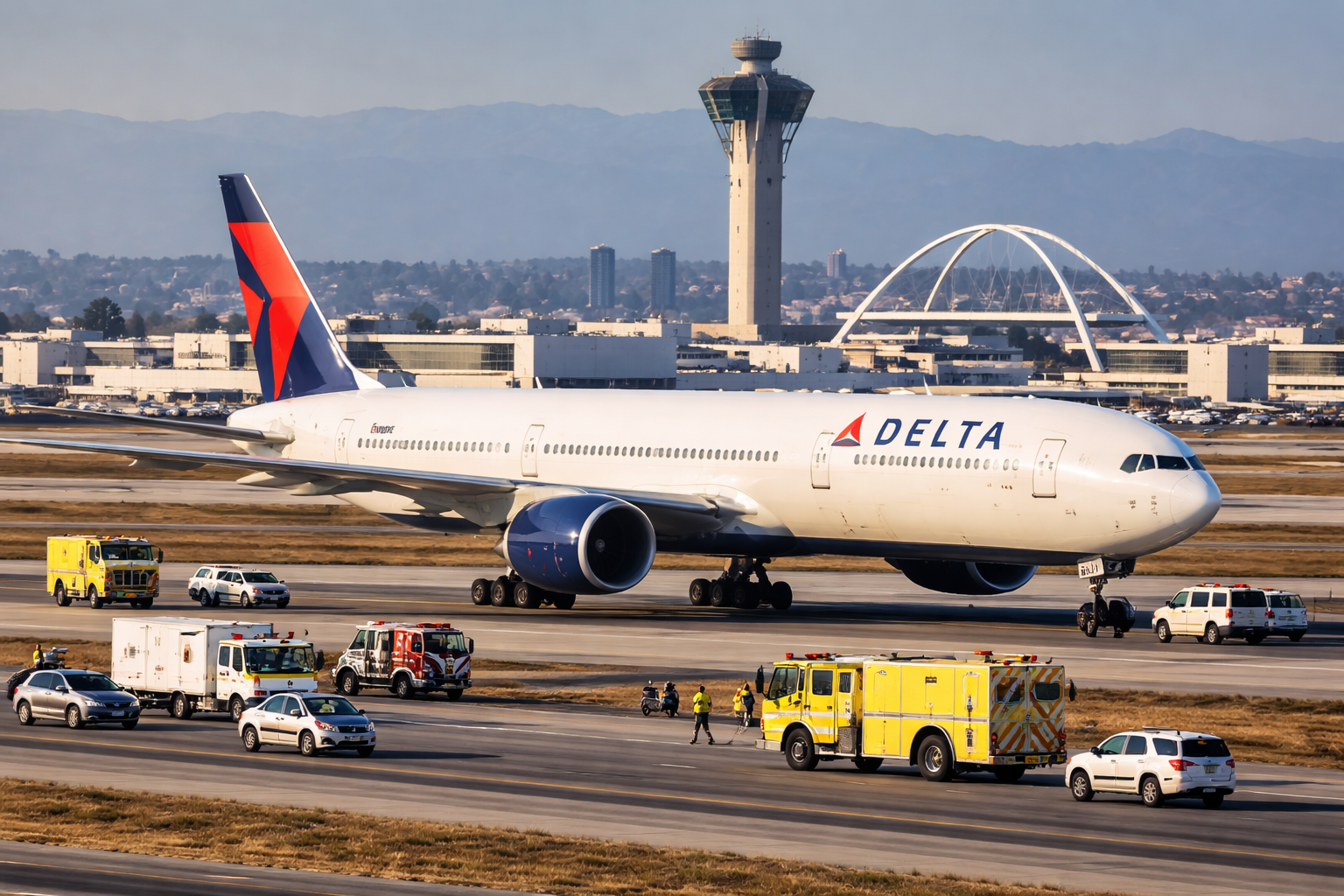

Air travel is often described as routine, even mundane, yet behind every commercial flight exists a complex web of systems, people, and decisions designed to manage the unexpected. The incident involving Delta Flight DL275 diverted LAX is a clear reminder of how quickly a routine journey can change—and how carefully those changes are managed.
This article offers a fully original, human-written, and deeply informative account of the Delta Flight DL275 diversion. Without speculation or search-based assumptions, it explains what such a diversion means, how it unfolds operationally, and why events like this matter to passengers and the aviation industry alike.
Overview of Delta Flight DL275 and Its Role in Delta’s Network
Delta Flight DL275 is part of Delta Air Lines’ long-haul international operations, typically flown by wide-body aircraft designed for extended routes over oceans and continents. These flights represent the backbone of modern global connectivity, linking economies, families, and cultures across time zones.
Long-haul flights operate under tighter margins than short domestic hops. Fuel planning must account for weather deviations, alternate airports, and extended holding patterns. Crew duty times are carefully regulated. Aircraft systems are monitored continuously through both onboard diagnostics and airline operations centers.
When a flight like DL275 departs, it does so with multiple contingency plans already in place. Diversion airports are preselected, fuel reserves calculated, and crew training ensures that no single event catches the operation unprepared. Understanding this background is essential to understanding why the diversion to LAX was not a failure—but a planned safety outcome.
The Moment the Flight Path Changed Mid-Journey
The defining chapter in the Delta Flight DL275 diverted LAX incident occurred when flight tracking data revealed a gradual but deliberate course change. Unlike emergencies depicted in films, real-world diversions are usually calm, controlled, and methodical.
In the cockpit, pilots rely on layered inputs: system alerts, real-time weather data, airline dispatch guidance, and air traffic control coordination. Any one of these factors can prompt a reassessment of the flight plan. Importantly, pilots are trained not to wait for problems to escalate. Aviation culture rewards early action over reactive decision-making.
From a passenger perspective, this moment may pass quietly. Seatbelt signs remain on, cabin lighting stays steady, and the aircraft continues flying smoothly. The drama exists largely in the decision-making process, not in the physical experience of flight.
Why Los Angeles Became the Chosen Diversion Point
Los Angeles International Airport is one of the most strategically valuable airports in North America. For Delta Flight DL275, LAX offered a combination of operational, logistical, and safety advantages that made it the preferred alternate.
First, LAX has runways capable of handling fully fueled wide-body aircraft, which is not universally true at all airports. Second, it hosts Delta maintenance teams, ground crews, and customer service operations, allowing the airline to respond quickly after landing. Third, Los Angeles provides immediate access to advanced medical facilities should a health-related issue be involved.
Choosing LAX minimized uncertainty. In aviation, reducing unknowns is the highest priority. The airport’s infrastructure allows problems to be addressed efficiently, whether technical inspections, crew changes, or passenger accommodations are required.
Understanding the Types of Issues That Lead to Diversions
While airlines rarely release granular technical details immediately, diversions generally fall into a few well-established categories. The Delta Flight DL275 diverted LAX incident fits squarely within this framework.
Medical situations are among the most frequent causes. On long flights, passengers may experience unexpected complications that require urgent attention. Even when onboard medical assistance is available, pilots often choose to land sooner rather than risk deterioration.
Technical indications also play a major role. Modern aircraft are extraordinarily sensitive machines. A sensor anomaly, even one with no immediate operational impact, can justify a precautionary landing. Aviation regulations prioritize inspection over continuation when uncertainty exists.
Less commonly, environmental or operational factors—such as sudden airspace closures or unpredictable weather—can disrupt original plans. Regardless of cause, diversions reflect caution, not crisis.
How the Flight Crew Handles Diversions in Real Time
The professionalism of the flight crew is central to how passengers experience a diversion. On Delta Flight DL275, pilots and cabin crew would have transitioned seamlessly into diversion protocols the moment the decision was made.
Pilots work through structured checklists that cover navigation, fuel management, approach planning, and communication with air traffic control. These procedures are practiced repeatedly in simulators long before they are ever used in real life.
Cabin crew focus on maintaining order, comfort, and confidence. They monitor passengers, prepare the cabin for landing, and communicate updates in a measured tone. Emotional stability in the cabin is not accidental—it is the result of extensive training in human behavior and crisis management.
This coordination ensures that, even during unexpected changes, the flight environment remains calm and controlled.
Passenger Experience After Landing at LAX
Once Delta Flight DL275 landed at LAX, the experience shifted from airborne operations to ground logistics. For passengers, this phase can feel uncertain, but it is governed by established airline procedures.
Depending on the nature of the diversion, passengers may disembark fully or wait onboard while the aircraft is inspected. International flights introduce additional complexity, including customs and immigration considerations.
Delta’s ground teams typically assist with rebooking, hotel arrangements, meal vouchers, and onward travel. While delays are frustrating, airlines are increasingly aware that communication quality matters as much as compensation.
For many travelers, how an airline handles disruption becomes a defining factor in long-term brand trust.
Operational Ripple Effects Within Delta Air Lines
A single diversion affects far more than one flight. When Delta Flight DL275 diverted LAX, the aircraft’s future schedule likely changed, impacting subsequent flights, crew assignments, and maintenance planning.
Airlines manage these ripple effects using sophisticated operations centers staffed around the clock. Aircraft may be swapped, crews reassigned, or schedules adjusted to minimize network-wide disruption.
From a financial standpoint, diversions are costly. Fuel inefficiencies, passenger accommodations, and operational delays add up quickly. Yet airlines accept these costs as part of their safety commitment. The alternative—continuing a flight with unresolved uncertainty—is never worth the risk.
Public Perception and the Role of Transparency
In the era of social media and live flight tracking, diversions are no longer private events. Passengers and observers can see route changes in real time, often before official statements are released.
Public reaction to the Delta Flight DL275 diverted LAX event reflects broader attitudes toward aviation. Some travelers feel anxious when flights deviate from plan. Others, particularly frequent flyers, recognize diversions as evidence that safety systems are working.
Delta’s communication strategy, like that of most major airlines, emphasizes accuracy over speed. Confirmed information builds trust, while speculation can undermine confidence.
What This Incident Says About Modern Aviation Safety
The diversion of Delta Flight DL275 illustrates how far aviation safety has evolved. Today’s aircraft, crews, and operational systems are designed to detect and respond to issues long before they become emergencies.
Diversions are not admissions of failure. They are demonstrations of layered safety philosophy—one that values prevention, redundancy, and conservative judgment.
For passengers, understanding this reality can reframe how diversions are perceived. The safest flights are not those that never change course, but those whose crews are willing to change course when needed.
Conclusion
The story of Delta Flight DL275 diverted LAX is ultimately a story of preparedness. From the moment the flight path shifted to the safe landing at Los Angeles, every action reflected a system designed to protect lives first and schedules second.
While unexpected landings disrupt plans and test patience, they also reveal the invisible strength of modern aviation. Pilots trusted their training. The airline trusted its protocols. And passengers benefited from decisions made with caution and care.
In a world where millions depend on air travel daily, trust is built not on flawless journeys, but on wise ones. The diversion of Delta Flight DL275 stands as a quiet but powerful example of aviation doing exactly what it is meant to do—bringing everyone safely back to the ground.
Read also: Geekzilla Tio Geek: A Deep Exploration of Meaning, Identity, and Digital Influence